“You Are Killing the Future”
Friday 20 November · COP31 closing plenary · Antalya, Türkiye
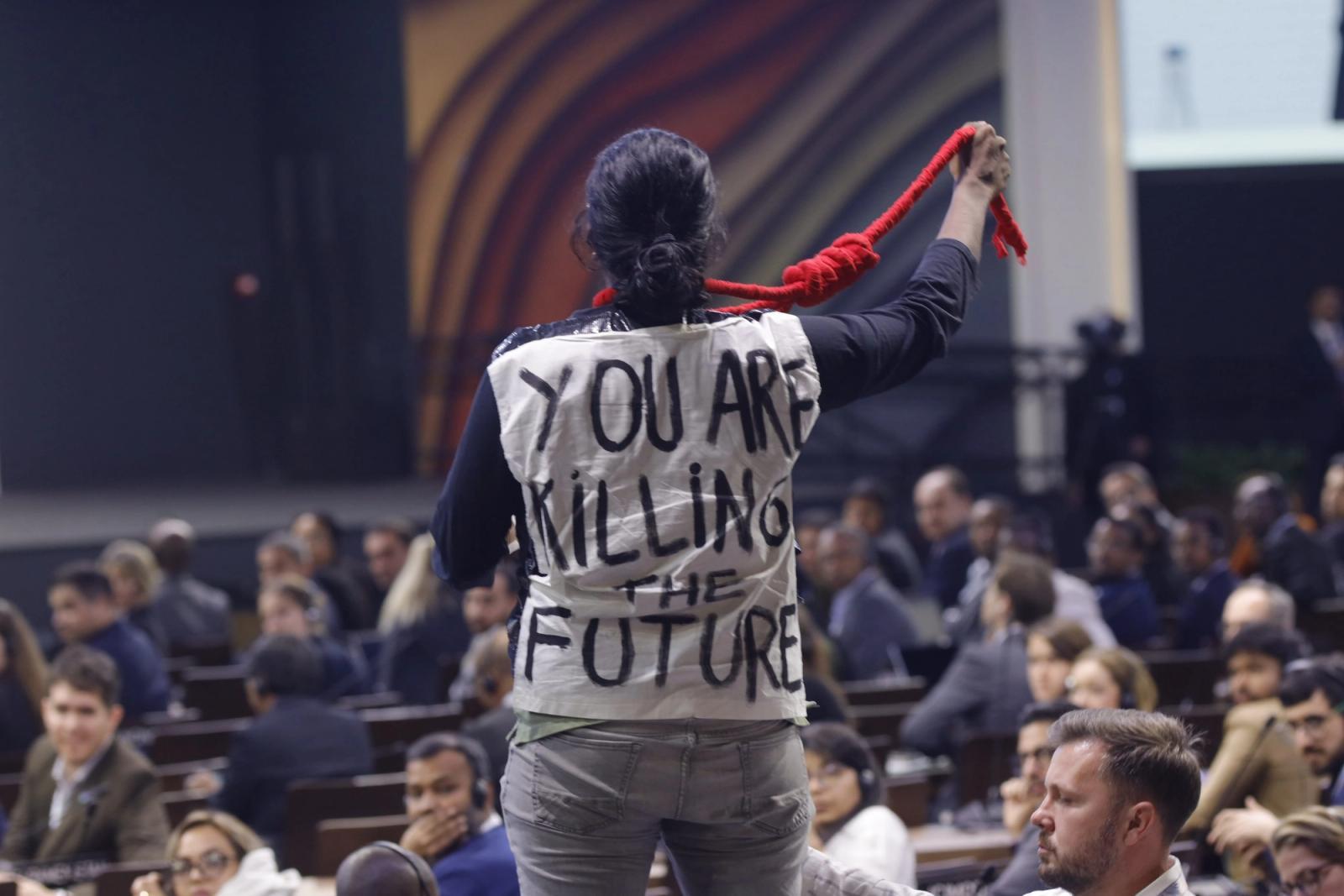
At the closing plenary of COP31 in Antalya, an activist wearing a red rope around their neck interrupted the address by conference president Murat Kurum. “You are killing the future!” they shouted, addressing the representatives gathered in the room. The intervention was met with applause and support from the plenary.
The protest came in response to a proposed final agreement that removed explicit references to phasing out fossil fuels and weakened commitments on climate finance and a just transition. Civil society movements warned that the negotiations risked ending without concrete measures proportionate to the climate emergency.
The interruption brought an open wound at the heart of the negotiations into the room. While communities across the world are already living with the consequences of ecological destruction, the language of international agreements continues to be contested around the interests and responsibilities of governments and corporations. The activist's words primarily insist on demanding that the future of those most affected by the climate crisis cannot be negotiated away with promises without actions.
The climate crisis moves across borders that political systems have drawn to organise territory, resources and power. Smoke travels from burning forests into neighbouring countries; rising seas reshape coastlines and threaten communities whose livelihoods and cultural memory are tied to the water. Economic strength offers no immunity. In China, one of the world's largest economies, coastal communities face the consequences of environmental change. These different places are connected by ecological systems that do not stop at national boundaries, and by struggles over who bears the cost of their destruction.
Across this region, artists and cultural organisers are finding ways to make these connections visible. Their work brings attention to the communities defending ancestral territories, preserving local knowledge and responding to environmental change. It also raises a question that runs through this dispatch: how can people build the relationships and collective capacities needed to confront a crisis that crosses borders and affects the whole planet?
When the forest burns, the smoke travels
Kuala Belait, Brunei · Elroy Ramantan · Throughout November
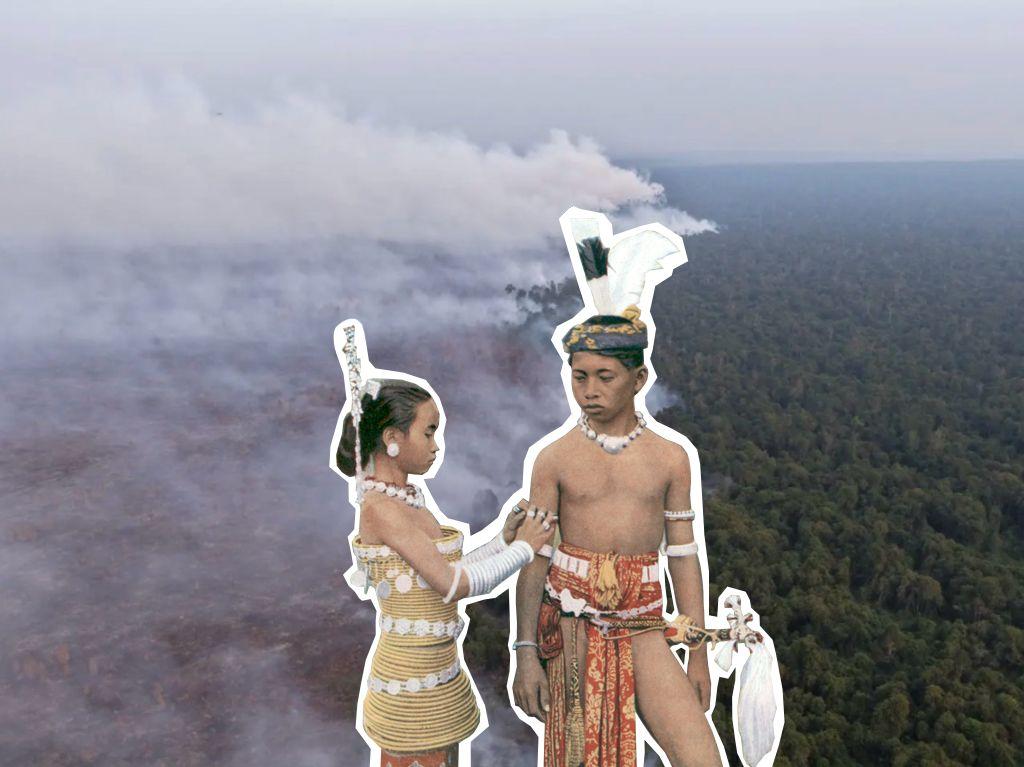
Borneo's forests are part of an ecological system shared by Indonesia, Malaysia and Brunei. Their destruction cannot be contained within the territory where a fire starts. Smoke from forest and peatland fires can travel across national borders, affecting air quality and public health in neighbouring countries. The haze makes visible a fundamental contradiction: the consequences of environmental destruction are shared, while the decisions that drive it are often made through extractive industries, land conversion and political arrangements that privilege short-term economic interests.
In Borneo’s Lung Crisis, artist Elroy Ramantan focuses on fires in West Kalimantan, where the destruction of ancient rainforests threatens biodiversity, displaces wildlife and endangers Indigenous communities defending their ancestral lands. The work asks who benefits from the destruction of nature, and who is left to bear its consequences.
In Heartbreak of Borneo, Ramantan turns to the political borders dividing a land whose ecological and cultural histories extend across them. These divisions accelerate deforestation, threaten Indigenous territories and contribute to displacement and statelessness. The work questions who has the authority to define, own and protect the land, while recognising the communities who have cared for it across generations.
Together, the two works reveal how environmental destruction and the dispossession of people are intertwined. The forest is not an isolated resource within a national territory. Its health is connected to the lives of communities, the movement of air and water, and the ecological balance of a much wider region. Defending Borneo means confronting the systems that turn shared ecosystems into sites of extraction. Learn more →
A changing sea, a living memory
Xiapu Fishing Village, Fujian, China · Artwork and concept by Xuanyi Liao · Throughout November
China's economic power has transformed its coastlines and connected its cities to global networks of production and trade. Yet economic growth does not shield coastal communities from the climate crisis. Rising seas, extreme weather and changes in marine ecosystems put pressure on fishing livelihoods and the cultural practices that have developed around them. Along the coast of Fujian, these changes touch a landscape where the sea is a source of work, sustenance, memory and identity.
In Climate Messengers By The Sea, independent artist Xuanyi Liao develops a participatory climate art project for Xiapu fishing village. Through murals, sound installations and a digital map, the work responds to sea-level rise while seeking to preserve the cultural heritage of the Tanka fishing community. Liao's practice focuses on climate resilience, marine protection and the transmission of local knowledge in coastal villages.
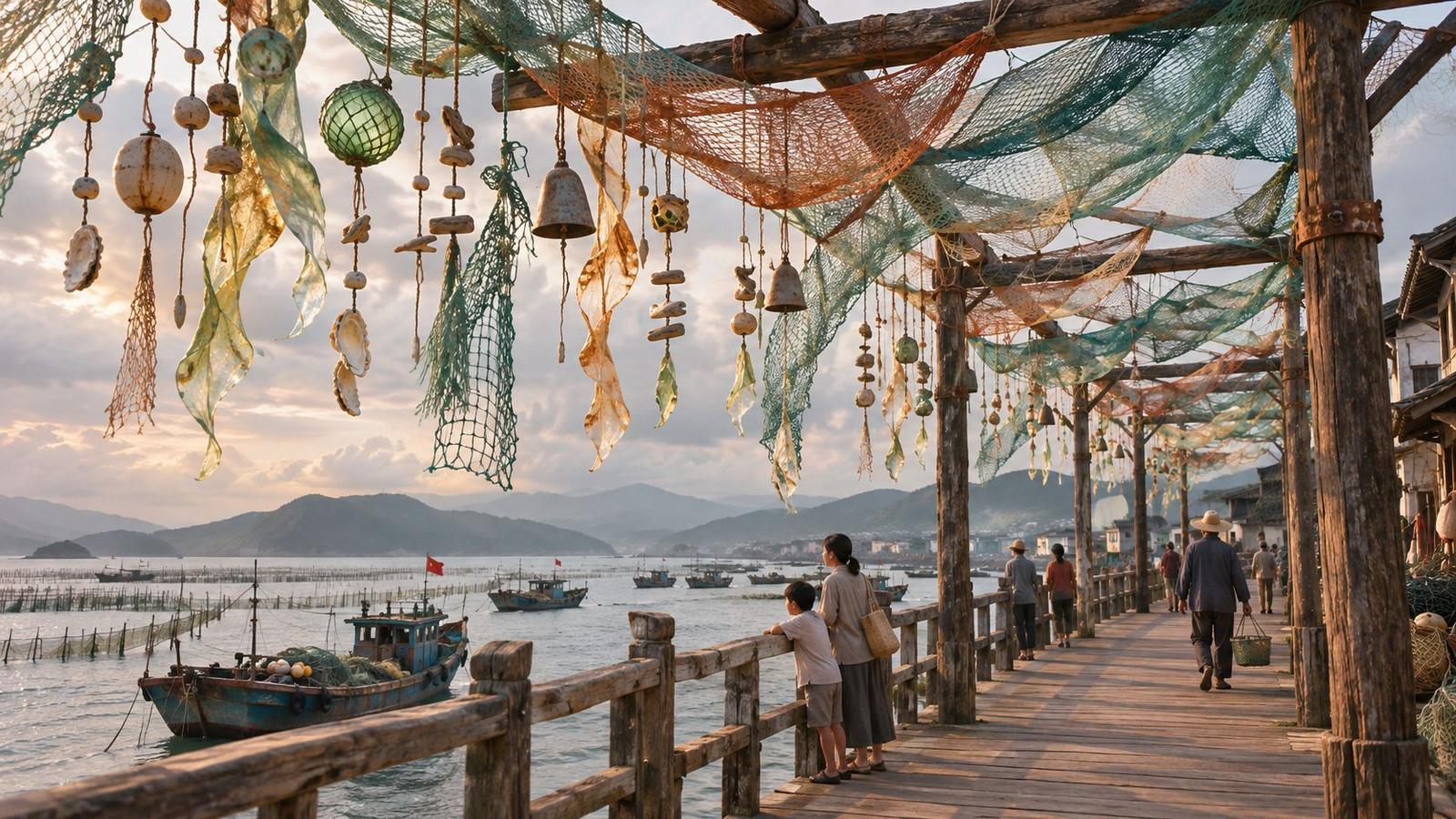
The project brings environmental change into a shared artistic process. Its different forms create ways for people to encounter the changing coastline and reflect on what is at stake for the community. The preservation of Tanka heritage becomes part of a broader question about adaptation: how can people respond to ecological changes while sustaining the knowledge, relationships and cultural practices that have shaped their lives by the sea?
The pressures facing Xiapu are local, but they belong to a much larger climate emergency. The scale of China's economy does not place its coastal communities outside the reach of rising seas. Their experiences remind us that the climate crisis is not confined to countries with fewer resources, and that economic development alone cannot secure a future for the people and ecosystems on which it depends.
Building the conditions for collective action
1–4 December · The Substation, Melbourne, Australia
If the climate crisis crosses borders, responding to it requires relationships that can cross them too. In Melbourne, PVI Collective, Creative Climate and The Substation are bringing together artists, activists and climate justice champions for Climate Justice Lab, a series of experimental and experiential gatherings designed to deepen connections between people working across different fields and struggles.
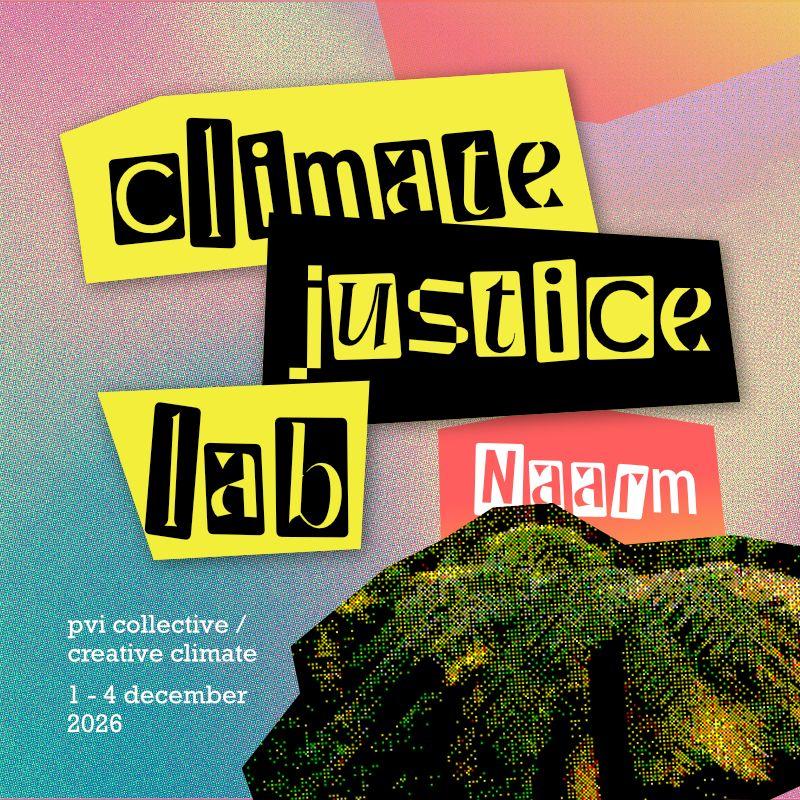
The programme creates time and space to share skills, listen deeply, learn from one another and explore possibilities for intersectional collaboration and future action. Its emphasis on experimentation, collective strength and play recognises that climate justice also depends on the ways people organise, exchange knowledge and sustain one another. The work of dismantling extractive systems requires alliances capable of bringing different experiences and forms of expertise into conversation.
The lab offers a practical response to the isolation that can separate struggles, communities and movements. It proposes collective work as a way to build the capacity for action, allowing connections made through art and cultural practice to develop into longer-term forms of cooperation. At a moment when ecological systems are being damaged across borders, the ability to work together becomes essential. Learn more →

What do we want? Free Palestine!
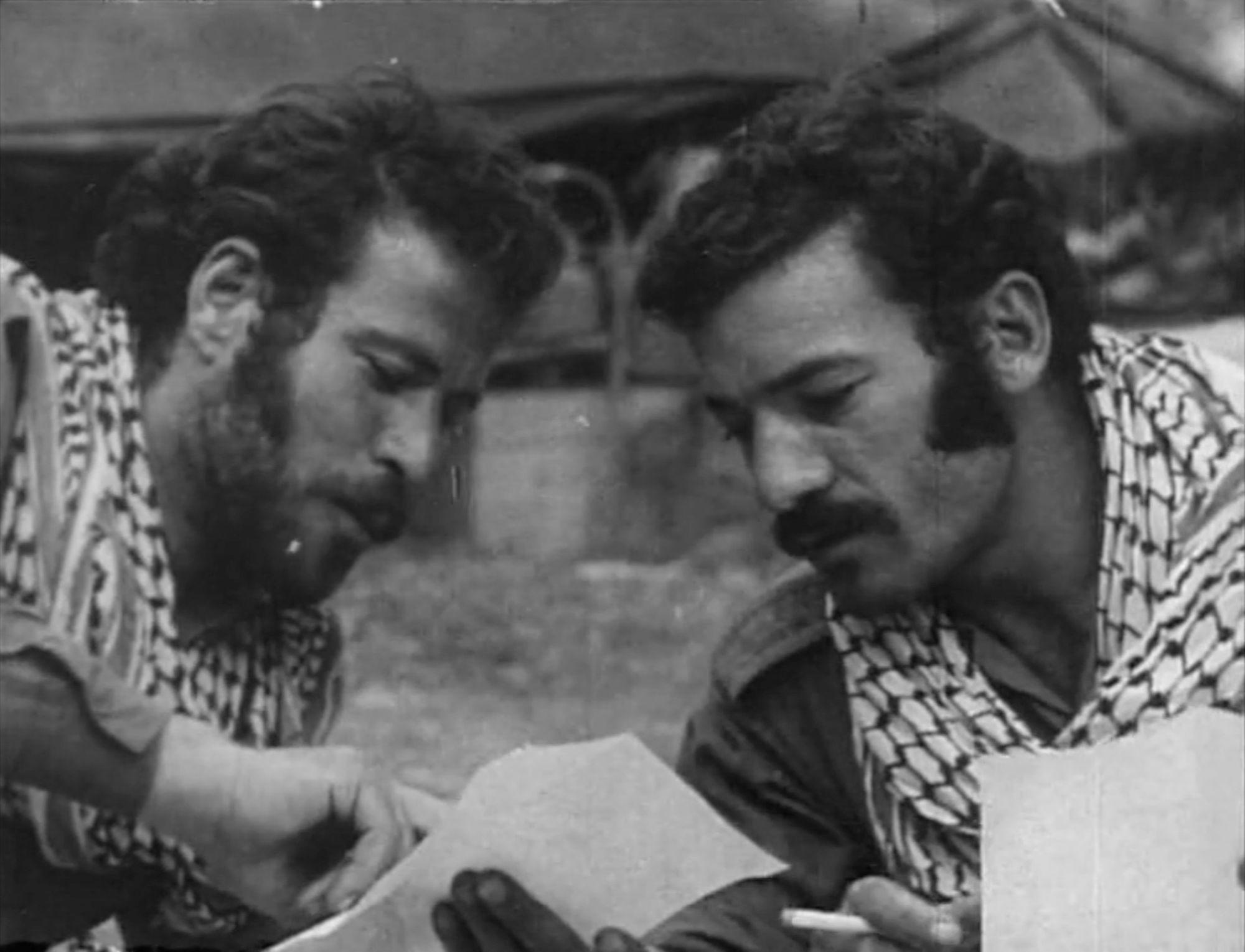
The fourth edition of Palestine Cinema Days Around the World, organised by Filmlab Palestine, also reached this region. Screenings took place at 打交道 inter.act in Beijing on 1 and 2 November, and in Manila on 2 November. Part of an international network of community-organised screenings, the initiative connects audiences through Palestinian cinema. Learn more →
You can join in too
Global Artivism Month continues until 10 December. You can join the movement by putting yourself on the map, sharing your art or listing a November event.